

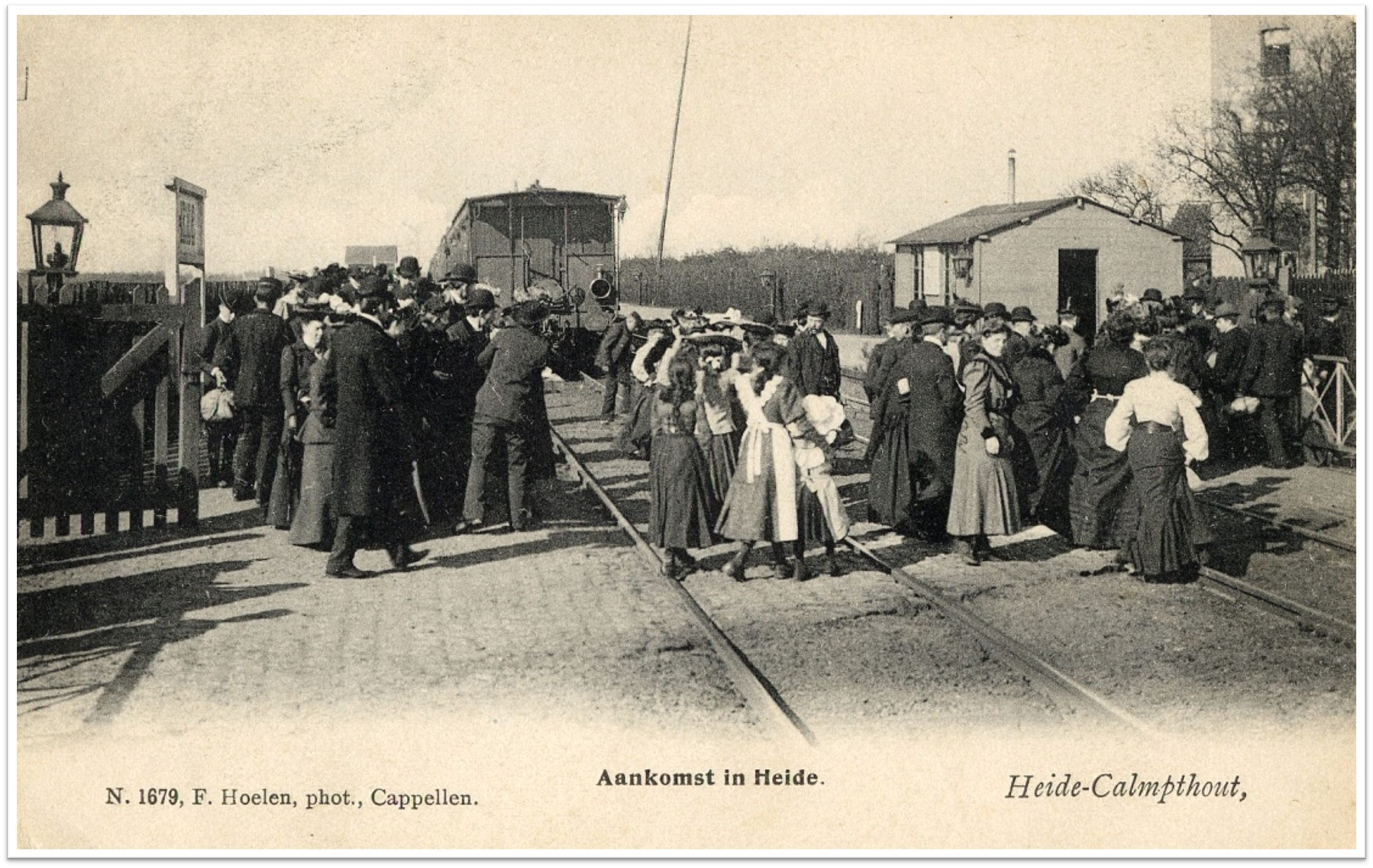
De weidsheid en rust in Grenspark Kalmthoutse Heide inspireren al decennialang wandelaars, fietsers, ruiters en kunstenaars. In 1854 bracht de allereerste trein, via de nieuw aangelegde Spoorlijn 12, de eerste rustzoekers naar de heide. Dankzij deze verbinding konden onze voorouders ontsnappen aan de hectiek van het stedelijke leven. Nog steeds vervult het Grenspark dankzij de vlotte verbinding met de trein en fietssnelweg Antwerpen-Roosendaal de rol van grootste stiltetuin van de provincie Antwerpen. Toch gebruikt een groot aantal bezoekers de auto om het park te bezoeken, wat zorgt voor parkeerdruk en overlast voor lokale bewoners. Dankzij het Europese subsidieprogramma Interreg kan Grenspark Kalmthoutse Heide, samen met gemeenten en partners, de komende jaren inzetten op een modal shift en een (her)inrichting van bestaande treinstations en onthaalpoorten om de recreatiedruk beter te spreiden.
Grenspark Kalmthoutse Heide werkt samen met VisitBrabant als trekker en andere partners om een gezonde balans te vinden tussen natuurbehoud en bezoekerservaring. Met steun van Europa via het Interreg-subsidieprogramma wordt er geïnvesteerd in het bevorderen van duurzame recreatie en een modal shift. Het project loopt tussen 2023 en 2027.
Project MONA
Dit project is onderdeel van het Europese project MONA, dat duurzaam toerisme in en rondom natuurgebieden in Noordwest-Europa stimuleert en bezoekersgedrag onderzoekt. Het Europese subsidieprogramma Interreg investeert €3,6 miljoen. Met een gezamenlijke investering van €2.4 miljoen van alle partners wordt in totaal €6 miljoen geïnvesteerd in het spreiden van de recreatiedruk in verschillende natuurgebieden. MONA staat voor ‘MOdal shift, routing and nudging solutions in NAture areas for sustainable tourism’.
Een duurzame koers voor toerisme
Met het project wil Grenspark Kalmthoutse Heide, in samenwerking met de vier gemeenten, inzetten op een modal shift door zachte mobiliteit met (elektrische) fiets, trein en bus te stimuleren. De verbinding tussen bestaande bus- en treinstations in de regio en de onthaalpoorten in het park kan worden verbeterd door bijvoorbeeld het gebruik van shuttles of deelfietsen. Daarnaast zet het project in op het aantrekkelijker maken van de bezoekerservaring vanaf het station tot aan de natuur, zodat deze ‘last mile’ geen drempel vormt maar een onderdeel wordt van de beleving. Route-aanwijzingen en gerichte communicatie over zonering sturen bezoekers in de juiste richting. Met deze duurzame koers wil Grenspark de parkeerdruk rondom de kwetsbare natuur en de overlast bij omwonenden verkleinen.
Onderzoek en Monitoring
Een belangrijk onderdeel van het MONA project bestaat uit monitoring, onderzoek en analyse. BUas (Breda University of Applied Sciences) en KU Leuven zijn aangesloten als kennispartners om data te verzamelen. Ook wordt gemeten of genomen maatregelen effect hebben. VisitBrabant zet daarvoor een monitoring op naar het gebruik van routes en de drukte in specifieke natuurgebieden, op bepaalde momenten. Deze informatie kan van pas komen in de afweging routes te verleggen of op te waarderen.
Duurzaam en drempelvrij toerisme
Naast een betere verbinding en duurzaam transport, heeft het project ook aandacht voor duurzaam en drempelvrij toerisme. Een betere infrastructuur en herinrichting van wandelpaden, onthaalpoorten,… moet zorgen voor een drempelvrij bezoek. Routes van gebruikersgroepen (bijvoorbeeld ruiters) kunnen verder worden ontwikkeld.
Partners in het project
Dit project wordt gerealiseerd in samenwerking met de volgende partners: Np Van Gogh, NP (NL), Utrechtse Heuvelrug (NL), NP Veluwezoom (NL), Grenspark Kalmthoutse Heide (BE-NL), Parc Naturel Régional de la Montagne de Reims (FR), Parc naturel Régional Scarpe Escaut (FR), KULeuven (BE), Breda University of Applied Sciences (NL), Polis (BE), Tourismus Zentrale Saarland (GE), VisitBrabant (NL) en Toerisme Provincie Antwerpen (BE).
Met dit innovatieve project zetten we samen stappen naar een duurzame toekomst voor Grenspark Kalmthoutse Heide, waarbij natuurbehoud en recreatie hand in hand gaan. Meer informatie over het project vindt u hier.


